
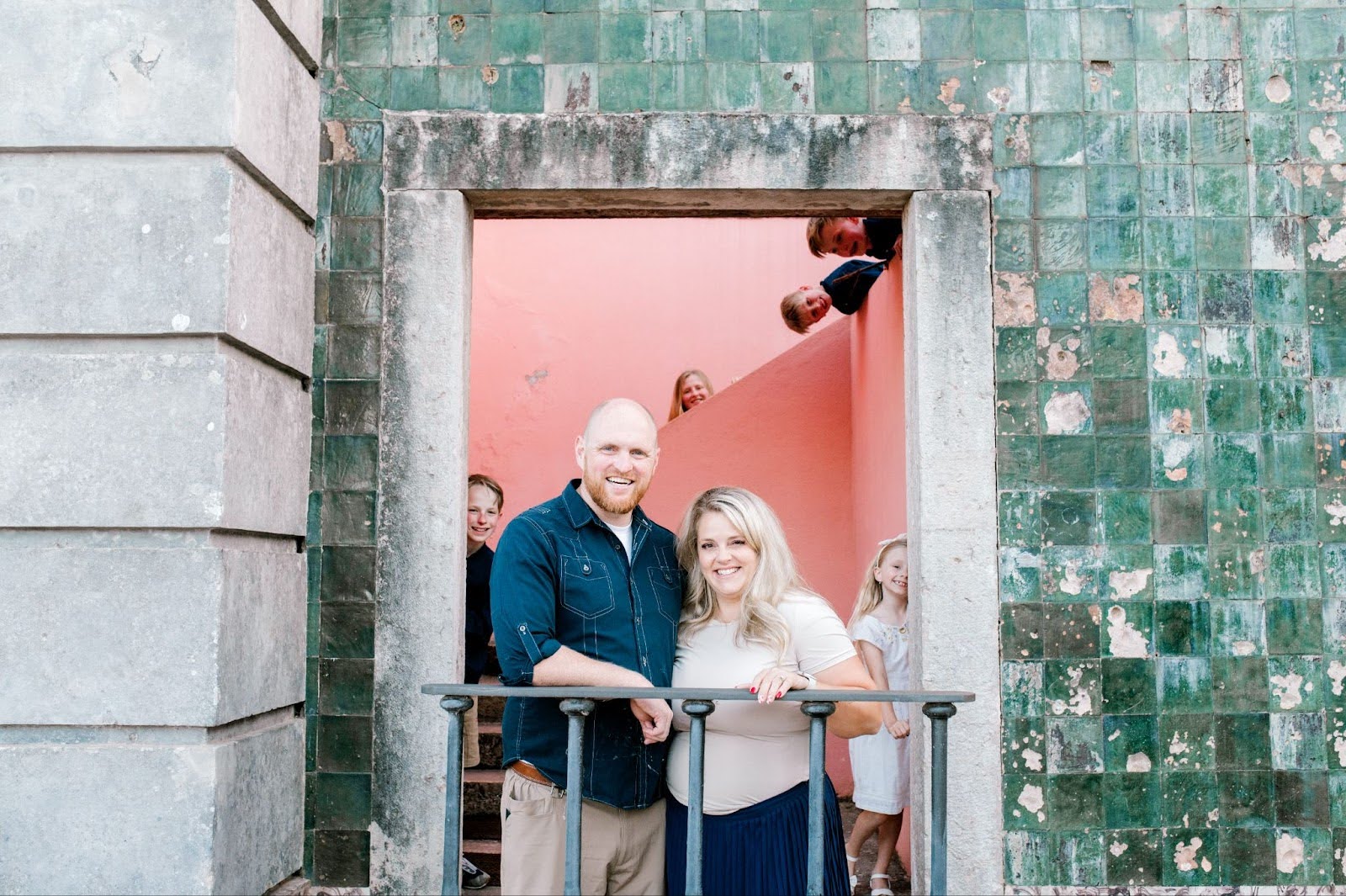
As I glance out over the sparkling blue waters of the Atlantic from my Portuguese home office, I find it hard to believe we’ve been American expats for nearly four years. The undercurrent of foreign feelings still hums under the surface of our everyday lives, but in many ways, this beautiful country feels like home.
Portugal lies on the westernmost coast of Europe (Cabo da Rocha, about 20 minutes from our home, is technically the westernmost part of all of Europe). Portugal boasts coastlines and climates similar to those of California. I always say Portugal is like living in beautiful, sunny California without all the crazy Californians 🙂 I have several friends from California who are also expats here, so I say that is best. But the reality is still there; Portugal offers many benefits for much less cost than similar places around the world.
What is it REALLY like to live here? I get this question each time we visit family and friends back in the USA, and I have percolated over this for the last few months, making notes on my phone about some of the things we like and some of the things that make us want to tear our hair out.
No location in the world is perfect. Wherever you currently live, I’m sure you could also point out several flaws. I provide this view of Portugal not to complain but to offer a personal, honest view in the hopes of providing more insight to those considering moving to Portugal. If, like Harry and Meghan (and several other celebrities), you are feeling the pull to Portugal, but unlike them, you’ll be relocating to your one home (and not visiting this home among your many vacation homes around the world), I hope this list can give you some food for thought!
*Disclaimer: This post may contain affiliate links. Opinions shared are my own, and I only endorse products I support. By clicking on any of the links below, I may get a small commission if you purchase at absolutely no additional charge to you. I appreciate your support.*

Chapters
5 Things To Consider About Living in Europe

If, like us, you are an American looking to relocate to Portugal, let me present some significant differences between the two cultures. Life in Europe is not meant to be like life in America. You will not have the same conveniences, rush, or mentalities as you are used to in the US. Hopefully, this is a good thing and part of your motivation to move to Europe! Otherwise, you might be woefully unhappy in Europe.
- Things are really old here in Europe. That may sound silly as you’ve fallen in love with the architecture, the rich history, the cobblestone streets, and the medieval walls of Europe, but when it comes to living here, it’s essential to keep this in mind. Houses built over a hundred years ago have issues. Houses built several centuries ago can have big issues. The metropolises of Europe were built long before cars and have tried their best to adapt while maintaining their histories. It results in a lot of population in tiny spaces. The “up close and personal” nature of life comes with its ups and downs. Your neighbor can be a wonderful friend and ally or be up in your business in ways you’d rather not have.
Sewage systems, electricity, foundations, mold.. All of these can be common in Europe. Germany may present a very different life than Portugal, for example, but you can find old homes everywhere in Europe. - Parking is always challenging in the city. In the US, we are used to large, wide parking lots (and parking spaces) and rarely wonder where we might park. Not the case in Europe. All big cities in Europe are made for walking (one of the big charms) and cars were added much later. Roads are winding, narrow, and parking is at a premium.
When we visited Split, Croatia, several parking areas were only accessible by driving in and backing out. There was no turning around to exit! This meant reversing like a pro around lots of tight spaces. Our tour guide joked that they are all “reverse driving experts” in Croatia.
Portugal lacks parking in general in cities. There are more cars than there are spots, it seems nowhere is free parking unless it’s your own building parking or driveway, and you better brush up on those parallel parking skills because you are going to need them.
Thankfully, many residents in the cities don’t drive and use public transportation. In Lisbon, I heard that only about 50% or less of residents drive at all. - Social mentalities are different. I can only confidently speak to Portugal, but we’ve felt this all around Europe. There seems to be either a fascination with the world at large outside of Europe or a strong distaste for everything not domestic to that country. We’ve felt, in general, that Europe is more closed-minded than the US. Traditions shape society, even when they are horribly outdated.
Foreigners may be welcomed, but they will forever remain foreign. The US blends so many cultures and is relatively so young that it welcomes foreigners and quickly adopts them as its own. Europe is not this way.
Foreigners may be welcomed (depending on the country!), but they will never quite get the accent, never do the traditions correctly, eat unhealthy or strange food, etc. As a tourist, this doesn’t even matter. You are so enthralled with your surroundings that you likely won’t even notice the stares or eye-rolls of the locals around you. Once you move in, however, these stand out a lot more. - Prejudice in Europe. Continuing from the previous point, there can be strong prejudices in Europe that I didn’t expect. I always thought Europe was welcoming to cultures as the “birthplace” of many ideals and art forms.
However, it is strongly dependent on the foreign country. I think prejudice in Portugal is not based on skin color, as it can be in the US, but instead based on cultural background.
I see plenty of prejudice here against Brazilians or African cultures and ways of life. There can be a healthy fear of Middle Eastern cultures as well. I love that we live and go to school with people of all skin colors, and it seems the Portuguese don’t even see this. However, your cultural background can put a stigma on you right away. Thankfully, Americans are generally a fun oddity for the Portuguese. They find our culture amusing and love to practice their English.
Other European cultures, such as Spain and Germany, dub all media into the local language and strongly promote homegrown products and businesses over foreign ones. There is almost a push-back against foreign culture. I understand this. They are striving to preserve a culture in a world that continues to get smaller and want to force cohesiveness at the loss of their culture. However, this can be uncomfortable for expats and can limit integration. - Road trips = toll roads. We’ve driven a substantial amount in Europe, traversing from Lisbon, Portugal, to Split, Croatia, in just a few days. We drove for hours and hours across France, Italy, and into Croatia. We then drove from Croatia into Rome, Italy.
Freeways across Europe are excellent and come with plentiful amenities, such as restaurants in gas stations, playgrounds, etc. However, they also come with hefty fees! Our cross-Europe road trip cost us several hundred dollars in tolls. If we drive in Portugal from Lisbon to Porto, for example, it costs about 50€ roundtrip or more. Forget the large, open (free) freeways of America.

What We Love About Living In Portugal


- The locals. We fell in love with Portugal for many reasons. It’s hard not to be drawn to the beach, stunning coastlines, the Mediterranean attitude and way of life, and the cheap surfing lessons! However, we fell hard for the core of Portugal.. It’s people.
We felt like the Portuguese embraced us lovingly and wanted to help us stay. We met some of the nicest people we’ve ever known. The culture here is, generally, one of caring for others. Sure, you can find road rage sometimes and some rude people like you can everywhere, but I find it to be a culture of taking care of your neighbor.
I love seeing young, fit policemen helping the “velhinhas” or older ladies cross the street. I love hearing about my lash lady watching someone struggle on the bus and getting off to help her, even though it made her late for work. I see my kids’ teachers and aides give my kids hugs and kisses daily.
The heart of Portugal is tender, and I love it. They tend to be a little shy and are wary of warming up to foreigners who might leave in a couple of years. However, they care for each other like a big family. - The older generation. Speaking of the “velhinhas”, we find the older generation in Portugal to be such a pleasure to get to know! They’ve survived a severe dictatorship and communism, they’ve learned to be frugal to an extreme, and they value family above all. We have a gentleman in our church congregation who has notes on all birthdays for over 300 people. He calls them all on their birthday, including us and our kids.
Portugal has been considered a “retirement hot spot” for many years, especially for Brits. Services are robust for older folks and make retirement here appealing. - The European lifestyle. While we haven’t lived as expats in any other European countries, we have visited many, including France, Croatia, Italy, and more. The lifestyle in Europe promotes mental health and healthy living! Sometimes, the work expectations in the US lead to immense pressure to perform and never take time off. Portugal and Europe at large throw this into the wind and value their holidays, family time, and taking upwards of a month off or more each year.
Strong social networks exist, more people care for the disadvantaged and disabled, and there are strong social bonds in Europe. This article, for example, highlights the difference in suicide rates. Some of the social pressures in the US, for youth and adults alike, are less in Europe.
Another example of the fabulous lifestyle is the two-hour lunch at our kids’ school. We can take them out for lunch and not be rushed but play some games and enjoy time together. On other days they go swimming or to a chess club in the middle of the day, before they are mentally exhausted, and they are able to get some energy out. - Safety. Portugal is ranked as one of the safest countries in the world. According to this article, “In 2023, Portugal rates as the seventh most peaceful country in the World. Iceland is number one. Denmark is number two. Ireland (South) is number three, New Zealand number four, Austria number five, and Singapore number six.” For reference, the United States was ranked 131.
While it is important to watch for pickpockets in very touristy areas, I’ve never seen it personally. It brings us a lot of peace of mind to live in a country where kids don’t have access to guns at home (not that we are against gun ownership!) when considering a playdate. It brings lots of peace of mind in regards to sending kids off to school. The more school shootings we see in the US the sadder we are for those poor children and parents on all sides of those situations.
Our teenagers take the public train every weekday to school by themselves, even after dark. Besides some flirtatious hecklers wanting to tease our daughter, neither teen has had any problems. The public transport is very safe with many older people and solo women travelers alongside the teenagers. This allows us to give them some important freedom and we aren’t chained to car transport like some of our US peers. - History comes to life. When our kids not only learn about a palace or dynasty in Portugal, but get to visit in real life on a field trip, I pinch myself. What an experience! We’ve experienced this during our couple of years of world schooling, but I still find it thrilling to be able to learn and experience history first-hand at the same time.
- Accessibility to so many other cultures. Similar to taking a domestic flight in the States, we can fly for 1.5 hours and be in London, Spain, or Southern France. We can drive six hours and be in Madrid. We could go to Paris for lunch and fly home! As travel lovers, I find this quick access truly addictive!
- Portuguese Language. Ok, learning Portuguese takes work. It’s quite hard, actually! I’ve put in some serious class hours and tons of conversations to get fluent to the point I can communicate pretty much everything I want. I can go to the doctor and speak only in Portuguese. I can pick up on conversations around me, which is sometimes fun when they think I can’t understand. 🙂 However, at least in Lisbon, English is also prevalent. I am spoken to in English often and once I respond in Portuguese, they will happily revert to Portuguese.
I’ve seen some complaints in expat groups that there is a pushback on English, especially in smaller towns, and I’d believe it. For me, the thought of moving to another country and NOT learning the language on some basic level, at least, is ludicrous. I would expect someone to learn basic English in the US, so why would I be any different? We find that locals are pleased when we speak in Portuguese, which is much more welcoming. However, many will try to speak with you even if you never learn Portuguese.


Things We Don’t Love About Living in Portugal
Disclaimer: I’m part of several expat groups, some of which are very negative about Portugal, to try and balance out our expectations and experiences with those of others. I often wonder how much our full-time travel experiences prepared us for some of the difficulties of living abroad.

While I see and can relate to many of the negative complaints, in some ways, I’m just not one to expect it to work like the US. I know I’m in a new place and try to seek advice and professional help on serious items, like visas, buying a car, signing a lease, etc.
Many people love living in Portugal, and many hate it! I’ve seen comments like, “Portugal is sucking the life out of me!”. It’s hard to reconcile this with our experience, in which I felt like Portugal breathed life into our family. However, suppose you are seriously considering moving here. In that case, I’d suggest joining many expat groups on Facebook (including some negative ones, like “Portugal Propaganda”) to get some idea of both sides of the coin.
- The differential in costs versus wages. While we are lucky to earn outside of Portugal and contribute to the economy with our spending here, there is a giant discrepancy between what people earn here and the cost of living. The average salary is around 1000€ per month. Rent in our area for a small apartment is also around the cost. We do live in an expensive area outside of Lisbon, but countrywide this is a problem.
- Bureaucracy. Hold onto your shorts if you need to do ANYTHING paperwork-related here. The best course is to hire a lawyer (which sounds fancy to us Americans but can be very reasonably priced. Our friends at Moovin have several on staff and can help!). The bureaucracy of Portugal withers even the strongest of expats. It is terribly slow, antiquated, and very much a game of “who you know”. This is why I advocate hiring someone who has connections.
- Being taken advantage of as foreigners. This happens in many countries, but foreigners can be taken advantage of. Some dishonest Portuguese view expats as walking wallets, and restaurants go as far as to offer menus for locals and menus with higher prices for expats. This is very much the case in other countries as well. We experienced this a lot in Italy.
We haven’t been aware of this happening to us yet, but I’ve heard several stories.
- Contractors and service providers are slow, and it can feel like they have no interest in your wishes.
A couple of examples:
a. Any American knows that a broken toilet with a large family is not something enjoyable, and there are plenty of 24-hour emergency plumbing options for you. Not the case in Portugal. Our main toilet broke three times (due to poor repair work) and was completely out of commission for days and days at a time.
The Portuguese don’t seem bothered by this and sometimes repair needs go on for years. They simply live around it. In this way, they are not bothered if your toilet is broken, but to me, it is difficult to reconcile. I hate waiting days and weeks to get simple repairs done. Things being broken often fill me with dread!
b. We will eventually buy a home in Portugal, but we are still saving for the massive 30% down payment and exploring our options. We did explore in detail one home that we were considering buying. We had three contractors come give bids for the VERY extensive remodel.
These came in at three widely different amounts: 200K, 850K, and 500K. It’s hard to know what to do with such wildly different quotes. Will the 200K person actually show up and finish the job? How much padding does the 800K quote have in it? In reality, many service providers take advantage in Portugal and not just of expats. Our Portuguese friends just remodeled a tile floor for a party. When the lady of the house commented on the work of the contractor and made small suggestions, the contractor left with the entire deposit and never returned!
The service provider game is like the wild, wild West and relies heavily on personal recommendation. The same goes for the real estate market. Many times, service providers won’t even call you back if you aren’t introduced first by someone they like. - Lisbon is dirty. I love Lisbon. She holds a special place in my heart, and I try to visit downtown Lisbon a few times per month. However, I’m the first to admit it’s quite disgusting sometimes. For whatever reason, locals and foreigners alike throw their trash on the ground, rarely pick up of their dog poop, and have little regard for the cleanliness of their charming city. I cannot comprehend this in any way.
- Graffiti in Portugal. This is a massive problem in Portugal, especially in the larger cities. Another thing I cannot understand. Portugal lived under a communist dictatorship for decades which wasn’t unlike living under the Nazi regime. It was incredibly strict, and neighbors turned in neighbors for small infractions.
Thankfully, those days are over, but the pendulum seems to have swung in the other direction. Graffiti is rampant and shows up overnight. It would be nearly impossible to clean and re-paint without a reoccurence, so the government and private owners simply leave it be. It’s ugly and unfortunate. I hope that someday Portugal can solve this artistic problem.
- Sewer systems. When we traveled through Asia, and I first discovered squatty potties and that you cannot flush your toilet paper in some places, I was a bit horrified. As Americans, we are incredibly spoiled in this regard. However, sewer systems that may date back to the Roman period can’t handle modern-day conveniences in some cases.
Yes, there are places in Portugal where you cannot flush toilet paper. Sewer systems are also rustic and fragile. Most homes do not have garbage disposals, and you need to be careful what you put down those pipes. The system also lies very close to the surface (not buried deep under roads like in the US), which can lead to some unpleasant smells.
- Public facilities. Portugal’s economy struggles, and this is reflected in the public spaces. From bathrooms to concert venues, you must take your expectations down a few notches. Many buildings are old, rudimentary, and poorly maintained. Bathrooms are often out of toilet paper (seriously, always check!), door locks are broken, etc. Everyone kind of just accepts this. Another thing I hope to improve as Portugal “grows up” a bit.
- Climate challenges. The balmy, mild temperatures of this coastal region make lifestyle glorious a lot of the time, but they also bring some challenges. Mold is a big issue in Portugal. This usually stems from a leak in the roof that seeps water into the stone walls and buildings, resulting in horrible mold.
Since repairs are slow and many can’t afford to fix it, or they simply don’t care or have no control over the building at large, many just clean the mold off multiple times each winter. Black mold can surface quickly and be a real health problem. Our rental house simply has painted over the mold, but the longer we stay the more we see it trying to creep in. We combat it as best we can with dehumidifiers, a MUST in a Portuguese winter.
- Older homes often have no central heating, or any heating at all, so space heaters are also a staple at our house. It’s quite cold in the winter and we will flip on the space heaters a few times a year, but electricity is VERY expensive. Last month with some regular use our electric bill was nearly 800€.
- Bugs and insects are also a challenge. I’ve never lived in a mild climate, so much of this is new to me! We deal with endless spiders, mosquitos all year, cockroaches, fruit flies, miller moths and more on a constant basis. The weather is often nice and leaving windows open during the day is lovely. However, unwanted guests come in. I also recommend a cat to avoid mice!
- Strikes in Portugal. Also not unique to Portugal, strikes are very annoying and common. This seems to be a way that some European countries deal with wage problems (we saw several strikes during our month’s stay in Paris) and no industry seems to be exempt.
From schools to public transport to nurses and medical staff, dealing with strikes is something you must adjust to when living in Europe. During our second year, our two oldest went to the public school and had over a week off due to strikes. They still had to show up each day to see if school would happen, but then head home. Thankfully, we work at home, but this left many kids with working parents alone all day.
I also heard of our friend not getting medicine quickly during a nursing strike in the hospital and other patients on the public system not getting medicine at all that day! This is so wild to us Americans, but simply part of the life here.
- Patriarchal Attitudes in Portugal. While this isn’t one I’ve personally dealt with a lot (I think I simply break the rules and expectations in many ways), I see and hear a lot of comments about the male gender in Portugal being a little hard to get along with.
Males do seem to dominate, and there very much is an “old boys club” mentality, but I also see many fantastic, strong Portuguese professionals and mothers. Part of the local culture does defer to men, and overall, there is little involvement in functions I participate in from the men when it comes to cleaning or other “female” jobs.
However, I’m not a super feminist and sometimes enjoy a division of roles, so I’m not super bothered by this. I’ve met many kind, supportive men who love to see empowered women. I mention this point mostly because it trolls the hate Portugal groups, but I also think you will find what you are looking for. If you think this problem exists in Portugal, you will find it.
Things To Consider Before Living in Portugal

While I know there are more things we don’t love about Portugal than things we really do, we still love it here and are planning to stay. I also seek to give you a real view outside the touristy love we all have for somewhere when visiting.
Living in a place is very different from visiting, even over several trips or extended time. Integrating your everyday life into a new and foreign place is tricky. Finding doctors, learning where to shop, trying to make friends, and even learning where and how to mail a letter can all be really tricky and tiring.
A lot of success in a new place is the luck of the draw. Will you live by other expats? Will your kids have other expat kids in their class? Will you like the neighborhood? Many of these things you cannot control or even predict. You may have a neighbor you love or hate. You might have a dog in the neighborhood that barks non-stop (this is common in Portugal). Or you might find your best friend across the street and love your new life!
The attitude you come with makes a huge difference! Do not move to a foreign country expecting your life to function the same as it did in the US. It simply will not. Start fresh and build a new life.
You can be very happy in Portugal too! And in case you are, send me an email so we can meet and chat 🙂

Warm hugs,
Leslie,


Additional Reading
Moving Your Family to Portugal from the United States: What to Know
Why We Are Uprooting Our Family and Moving To Portugal
Planning to Move to Portugal? Moviinn Can Be Your Trusted Ally for All Your Relocation Needs!
Leave a Reply