
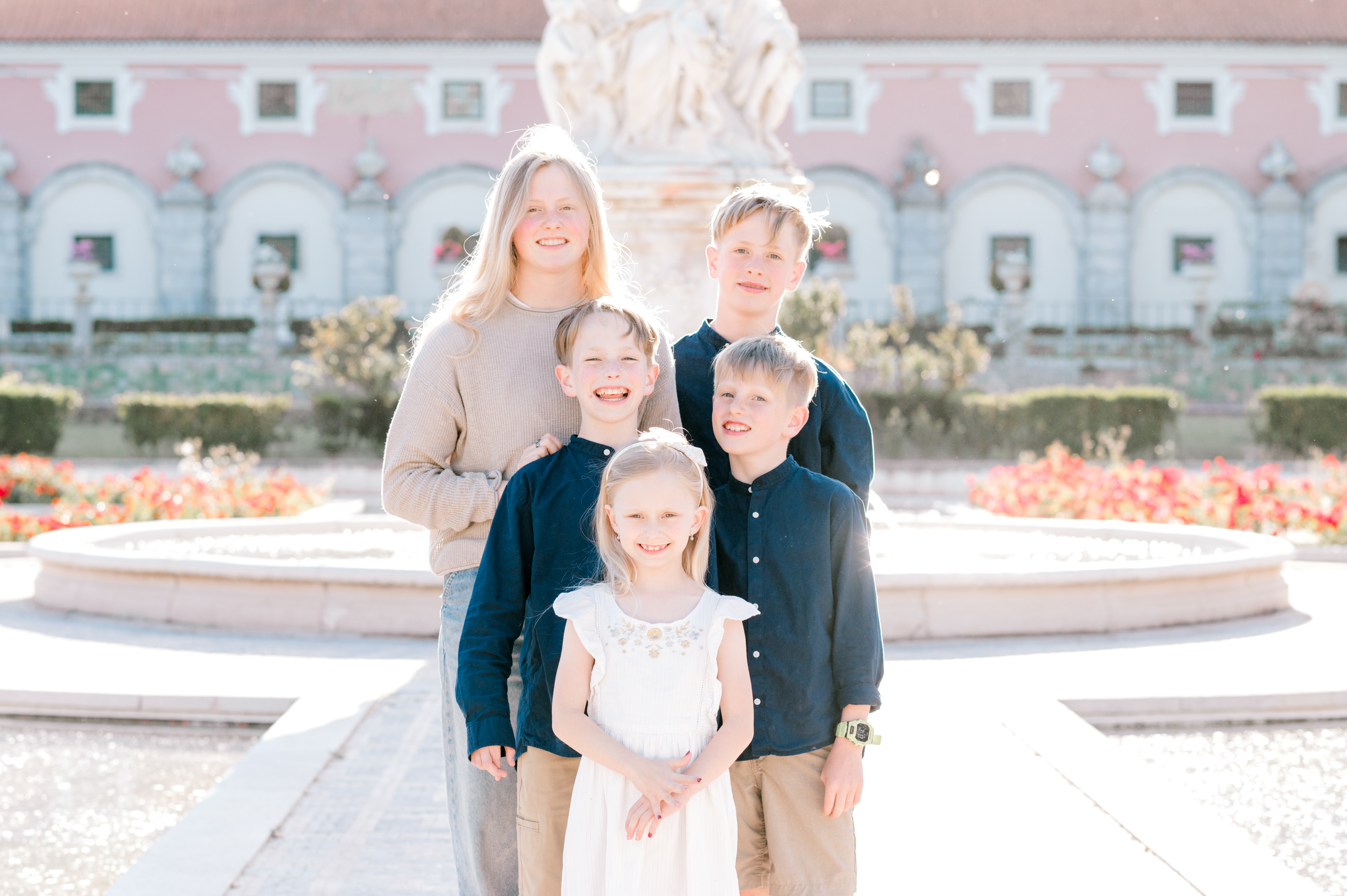
School is one of the major factors we first considered when we decided to uproot our family and move to Portugal. Kids are going to spend most of their young lives in school, so picking the correct one is paramount! We knew from the beginning we were going to put our kids into Portuguese-speaking schools. While extremely difficult, we knew this would be the fastest and quickest way for them to learn the language.
When we moved to Lisbon almost three years ago, our kids were ages 13, 10, 8, 6 and 4. This split them into several different levels of Portuguese school.
Children are not required to attend school until age six, but nearly all do. In fact, nursery, or creche, starts as early as three months. Most toddlers go to school by 6-12 months, as most parents work. In Portugal, it is called school rather than daycare, but is essentially the same.
The government heavily regulates the curriculum, the Ministry of Education, and we’ve found it to be well-rounded and advanced compared to what the kids were doing in the States when we left. Math, especially, has proven to be more advanced, but most of our kids have enjoyed the challenge once they caught up.

Educational Approach in Portugal
The Portuguese education system has five “cycles”:
- Preschool: This cycle is optional and is intended for children between the ages of 3 and the age of entry into primary school (6 years)
- 1st Cycle: 1st, 2nd, 3rd and 4th grade
- 2nd Cycle: 5th and 6th grade
- 3rd Cycle: 7th, 8th and 9th grade
- Secondary education: 10th, 11th and 12th grade
Preschool Education in Portugal
- Pre-school education is optional and caters to children aged 3 to 5.
- It focuses on the child’s overall development and prepares them for primary education.
- Children take naps in school during the day. Our little Grace wasn’t napping at home when she entered preschool and resisted napping during the day for a few weeks. However, she eventually gave in and was much happier when she got home!

Primary Education in Portugal
- Primary education is compulsory and is provided for children aged 6 to 10.
- It comprises four cycles: 1st cycle (1st and 2nd grades), 2nd cycle (3rd and 4th grades), 3rd cycle (5th and 6th grades), and 4th cycle (7th to 9th grades).
- The curriculum includes Portuguese language, English, mathematics, science, history, geography, and physical education.
- Starting in the 4th cycle, children start learning a second foreign language besides English, usually either French or Spanish. They may even take school trips to France or Spain.
Secondary Education in Portugal
- Secondary education is divided into two cycles: basic secondary education and secondary education.
- Typically, secondary schools have three tracks.
- Art track
- Science/humanity track
- Vocational track
- Students have to apply to these tracks and be accepted.
- Basic secondary education (10th and 11th grades) is compulsory and provides a general education.
- Secondary education (12th grade) is not mandatory but necessary for higher education access. Students can choose to follow a vocational course instead.
- At the end of secondary education, students take national exams called “Exames Nacionais” in the subjects they choose. These are graded between 0-20. This is similar to the SAT or ACT for American students and is used for applying to university. However, unlike SAT or ACT, it is required for all students. If a student wants to pursue engineering, for example, and scores low in math, they may not even be allowed to apply to engineering schools. It is extremely important.
- Portugal is home to around 587 public secondary schools. In 2019/2020, 308,764 children attended a public school, which is more than half of the total number of students. Out of these, 184,740 opted for science-humanities courses and 69,079 for vocational courses.
In order to graduate from secondary school, students must receive at least a 10 out of 20 on their final tests. In talking with a teenager recently who is thinking of applying to university, scoring 18-20 on these tests is expected for most good universities, especially on math.
Higher Education in Portugal
Universities are plentiful in Portugal and Europe, and many offer degrees in English. For example, near where we live, is Nova, an elite business school that offers all degrees in English. Many medical schools in Europe also offer degrees in English.
Costs are significantly less, and I mean by A LOT. A public university can cost as little as 20-50€ a month. Private universities in Portugal can charge around 800€ per semester.
Graduates from Portuguese universities are very successful in foreign countries, and there are many courses that meet the demands of a highly competitive world. Also, all public and private universities in Portugal offer the opportunity for foreign students to obtain a degree that is valid in the European Higher Education Area (EHEA).
Some examples of universities in Portugal include:
- Universities:
- University of Lisbon (Universidade de Lisboa)
- The University of Porto (Universidade do Porto)
- University of Coimbra (Universidade de Coimbra)
- Polytechnic Institutes:
- Polytechnic Institute of Lisbon (Instituto Politécnico de Lisboa)
- Polytechnic Institute of Porto (Instituto Politécnico do Porto)
- Polytechnic Institute of Coimbra (Instituto Politécnico de Coimbra)
- Polytechnic Institute of Leiria (Instituto Politécnico de Leiria)
- Private Higher Education Institutions:
- Catholic University of Portugal (Universidade Católica Portuguesa)
- Lusíada University (Universidade Lusíada)
- Instituto Universitário de Ciências Psicológicas, Sociais e da Vida (ISPA)

English Versus Portuguese
Once you’ve decided to enroll your kids in school in Portugal, your next big question is about the language. Will your kids attend in English or Portuguese?
I won’t lie: putting your kids straight into Portuguese school without them speaking Portuguese is a bit cruel. It’s not easy for them. Dropping our kids off the first day felt like sending them into a shark tank without any teeth of their own. Everyone was very welcoming, but not being able to communicate was isolating.
We had many, many nights of tears and frustration. Imagine sitting for eight hours listening to a curriculum you cannot understand. They came home from school emotionally and mentally drained.

Thankfully, teachers and aides want all kids to succeed and are dedicated to their students. They are loving and kind, and for our middle child, his teacher was his only friend for a long time. She is fluent in English and one of the kindest humans on the planet. He would tell me how tired she was each day “because she was too tired to play on the playground with him.” Talk about a silent heartbreak as a parent.
We prayed and comforted a lot, and eventually, all the kids began to understand. Eventually, they felt comfortable speaking. Two and a half years later, they are doing well. The teenagers found secondary school in Portuguese too challenging, so we moved them to English curriculums. I can hardly blame them.. I wouldn’t want to tackle physics and chemistry in Portuguese, either.
Within a couple of years of attending Portuguese school, our teenagers are at the point where they can communicate in Portuguese. Sadly, they won’t progress much more in Portuguese for now, but they have a solid base to build on if they want to in the future.
Schools provide language assistance to their foreign students in the form of PLNM, or Portuguese for non-maternal speakers. Your “maternal tongue” is the language you learned at birth. This tutoring might come in the form of some tutoring or classes provided to all foreign students after school.
Our younger kids will remain in Portuguese school for years to come. They have some language accommodations, such as some translations on tests, but are working out of that. Grace, the youngest, is in line with her peers in most ways.

Public Versus Private Schools in Portugal
The next big question to tackle is whether it should be public or private schools. Both come with advantages and disadvantages.
Private Schools in Portugal
Pros
Going to private school in Portugal is fairly common (although the majority of kids still go to public school). Portuguese private schools are relatively affordable. For our children, we pay around 350-450€ per month with additional fees for lunch, snacks, and transport to and from our house to the school.
Private schools tend to have more funding, more technology, and a lot of parental involvement in activities and performances. They also have sufficient staff and are in session more for working parents. Our kids can technically go to school during most breaks and participate in activities, but we always selfishly keep them home with us.
Additionally, private schools are much easier to register with. They will do a lot of the difficult work for you. Having enrolled children in public and private schools, I can attest to how helpful this is.
Cons
Depending on the school, the fees can be very high. International schools in Portugal have fees that might shock you: from 1000-3000€ per month or more. The expectations can be very high as well, both academically and socially.
Additionally, uniforms are required, and these are not cheap! Each shirt costs over 20€, with jackets clocking in around 40€ each. We spent almost 2000€ just on uniforms alone for our five kidsthe first year. We’ve now found there is a re-sale market between parents on Facebook, but we often still buy new.
You also need to provide your own books, which are not cheap either. You’ll also provide all the school supplies. Trying to buy school supplies in Portuguese when you don’t understand the language is quite an adventure! Thankfully, with more advanced planning, our school offers kits for books and supplies and will provide them for a fee.
Tour any private school in which you are interested. Try to talk to other parents, search expat forums for other parents in that area who have experience with the school, and use your judgment.

Public Schools in Portugal
Although there are many private schools in Portugal, only about 19.7% of students attend them. The majority of students attend public school, and many Portuguese people attest to the excellent education they offer. Many have told me that public education is better than private. After my own experience, I think elementary school age gets a bit more out of a private school, but not by much. I think once students are in middle school, their education is comparable.
Pros
Public school is free, even for most of the books. Parents are expected to provide some basic materials, such as pens and pencils, notebooks, etc. The school will provide a used book to the student or a voucher to buy the book at a bookstore. Note that this book belongs to the school, and students do not write in them; they write in notebooks instead. Also, note that these books must be returned to the school at the end of the school year.
Teachers and staff care deeply for the success of their students and work hard. Portugal invests a lot of money into improving its school buildings, providing access to technology, and offering school lunch very affordably (around 1.50€ a day). Students also have free access to public transport in Portugal (instead of a school bus, students take the public bus or train, at least in our area).
Additionally, many activities are also offered for free in public schools, from music lessons to surfing to sports. You do have to get into the activity with an application, and it needs to fit your student’s schedule, but it is amazing that these are offered for free. We pay for these activities at the private school.
Cons
Staffing can sometimes be an issue at public schools. Students can miss classes for weeks or months due to a teacher being sick, injured, or not staffed. When teachers apply for positions in Portugal, the government can place them anywhere, including in the islands. This means teachers can move around suddenly at the beginning of the school year.
Teachers also strike for higher wages on a fairly regular basis. Our second son missed nearly two weeks of school near Christmas due to strikes. Sadly, he still had to go to school each day to find out if the teachers would be there.
Public schools have a blend of different ethnic cultures, which can be a pro or con. Bullying is an issue in both public and private schools.
How to Choose a School For Your Child in Portugal
- Understand your child’s needs: Consider your child’s personality, learning style, interests, strengths, and areas of improvement. Identify their educational goals and any specific needs they may have, such as language support, special education services, or extracurricular interests.
- Academic quality: Evaluate the school’s academic reputation and performance indicators, such as exam results and university placement rates. Consider the curriculum offered and whether it aligns with your child’s educational goals and interests.
- Gather information: Visit their websites, read brochures, and request additional materials like prospectuses or school handbooks. Pay attention to details such as school values, academic offerings, extracurricular activities, and any unique programs they may offer. Determine what support services the school offers, such as counseling, learning support, or extracurricular activities.
- Seek recommendations: It’s best to talk to other parents, friends, or colleagues who have children attending schools in Portugal. You can find tons of info on expat groups on Facebook. Also, consider seeking recommendations from educational consultants or professionals familiar with the local education system.
- Visit the School: Take a tour of the campus, observe the facilities, and get a sense of the overall atmosphere. Meet with the school administration, teachers, and, if possible, current students and parents.
- Consider practical factors, such as the school’s location, transportation options, and daily schedule. Consider whether the school’s location is convenient for your family and how the daily commute might impact your child’s schedule and well-being.
- Consider your finances: Determine whether the school’s fees fit within your budget and if any financial aid or scholarship options are available.
How to Enroll Your Child Into Portuguese School
The process of enrolling your child can be surprisingly complicated. A private school is going to help a lot, but generally, you need:
- Passports
- Residency visa
- NIF
- Previous school year grades and proof of enrollment
Public school can be more complicated. I could not do anything without visiting the secretaria of the public school in person. Take a number as many other parents are doing the same thing.
The website to register your kids is extremely complicated and, of course, impossible to understand if you don’t speak Portuguese. The secretary was able to help me proceed forward on the website, but I did need translation help before I could speak myself.
You can read about another mom’s experience here.
How Did We Find The School For Our Children
We fully intended to put our kids into Portuguese public schools in our area. We arrived in Portugal in late August and had only about a week to pick a school once we found our rental home.
However, our landlady Isabel kindly recommended our children’s current private school. She put in a recommendation for us, and the school was amazing about getting us in quickly. They helped us register the kids in the Portuguese system, input the grades from the previous year, and set the kids up with tours and early days to try and meet other English-speaking students.
We loved the idea of all five going to the same school simultaneously. With how difficult the transition was, we took comfort in them, at least all going together.

How Our Kids Doing in Portuguese School
For our older children, bullying was an issue at the private school. It’s difficult for older children to integrate into a new school culture anywhere. However, their bonds are tight when babies start school together and continue through middle school.
The school did everything possible, but I think jealousy issues were too much for some students. Being the shiny, new American student can also put a target on your back. Sadly, we had to move our two oldest kids to the public school, which came with its own issues. We eventually found their place in an international private school with a British curriculum.
We now have three in Portuguese private schools and two in British private schools. All seem to be thriving as best they can. We enjoy these schools. Eventually, we plan to put all the kids into the English curriculum for high school (secondary school).

School Year in Portugal
The school year typically runs from September to June. The exact start and end dates may vary slightly depending on the region and educational level and are not announced until 1-3 months before. This makes planning summer vacation a bit difficult. We’ve missed the beginning of the school year more than once because we didn’t know when it would start and we were still on vacation!
The school year is divided into three terms: the first term, which usually starts in September and ends in December; the second term, which typically begins in January and concludes in March or April; and the third term, which usually starts in April or May and ends in June. There are also breaks during the school year for holidays, such as Christmas break and Easter break.

School Breaks in Portugal
There are several holidays and breaks throughout the school year. Here are the common holidays and breaks observed in Portuguese schools:
- New Year’s Day (Ano Novo) – January 1st: Marks the beginning of the new year. Schools are closed for this national holiday.
- Carnival Break (Férias de Carnaval): Celebrated in Portugal, and schools often have a short break during this time. The dates for Carnival vary each year based on the liturgical calendar, but it typically falls in February or early March. The break usually lasts for a few days.
- Easter Break (Férias da Páscoa): Typically one to two weeks long. The dates vary each year since they are based on the Easter holiday, determined by the lunar calendar. The break usually falls in late March or April.
- Freedom Day (Dia da Liberdade) – April 25th: Commemorates the 1974 Carnation Revolution. Schools often organize educational activities.
- Labour Day (Dia do Trabalhador) – May 1st: International workers’ holiday observed nationwide. Schools are closed.
- Feast of Corpus Christi (Corpo de Deus) – May/June: A moveable feast, usually falling on a Thursday in late May or early June.
- Portugal Day (Dia de Portugal) – June 10th: Celebrates Portuguese nationhood and honors poet Luís de Camões.
- Summer Break (Férias de Verão): The most extended break in the school year is the summer break. It typically starts in mid to late June and lasts until early September, lasting approximately two to three months. The exact dates may vary slightly between different regions and educational levels.
- Feast of Assumption (Assunção de Nossa Senhora) – August 15th: Religious holiday honoring the assumption of the Virgin Mary.
- Republic Day (Implantação da República) – October 5th: Commemorates the establishment of the Portuguese Republic in 1910.
- All Saints Day (Dia de Todos os Santos) – November 1st: Religious holiday honoring all Christian saints.
- Portugal Restoration of Independence (Restauração da Independência) – December 1st: Celebrates Portugal’s restoration of independence from Spain in 1640.
- Feast of the Immaculate Conception (Imaculada Conceição) – December 8th: Religious holiday celebrating the Immaculate Conception of the Virgin Mary.
- Christmas Break (Férias de Natal): This break usually lasts about two weeks and occurs around Christmas and New Year’s. It typically starts around December 22nd or 23rd and extends until the first or second week of January
Xoxo,
Leslie


Additional Reading
Moving Your Family to Portugal from the United States: What to Know
How To Obtain A Portuguese D7 Visa For Your Family: Everything You Need To Know
My Experience Learning European Portuguese: Portuguese Connections School in Lisbon, Portugal
Leave a Reply